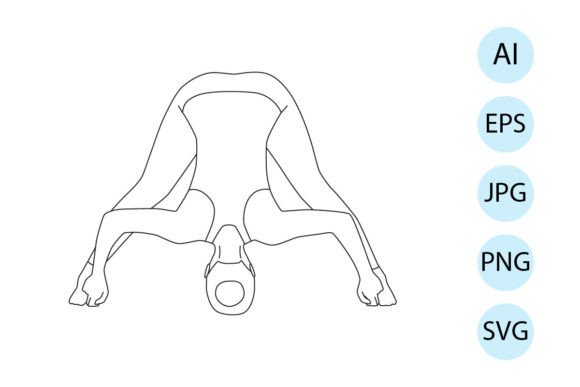
Yoga in Wide Legged Forward Fold Pose: A Designer’s Review
As a designer who spends half my day staring at stitch density charts and the other half worrying about thread tension, I don’t just look at an embroidery file; I look at its potential. When Yoga in Wide Legged Forward Fold Pose landed on my desk, it wasn’t just another line art graphic to me—it was a potential bestseller for my boutique shop or a delicate challenge for a custom client order. Today, I’m breaking down this Illustrations category piece from a practical, hands-on perspective. This isn’t about how pretty the digital preview looks; it’s about how it behaves when the needle hits the fabric.
The First Impression: Mood and Visual Clarity
Line art is deceptively simple. It relies entirely on contour, negative space, and flow. The moment I opened the file for Yoga in Wide Legged Forward Fold Pose, what struck me was the clean, uninterrupted flow of the lines. In the world of Graphics, simplicity is often harder to execute than complexity because there is nowhere to hide mistakes. This design captures the essence of the pose with a minimalist elegance that feels modern yet timeless.
The visual personality here is calm and grounded. For an embroidery project, this translates to a design that doesn’t scream for attention but rather invites the viewer to pause. It creates a mood of mindfulness and balance. Whether you are planning to use this for a tote bag design aimed at yoga enthusiasts or a subtle sweatshirt embroidery for a wellness retreat gift, the aesthetic works because it respects the viewer’s intelligence. It doesn’t need cluttered backgrounds or excessive decorative elements to make its point. The single-figure silhouette stands strong on its own, which is a huge plus for digitizing.
Real-World Application: Where This Design Shines
Let’s talk about where this machine embroidery design actually lives in the wild. I recently imagined using this specific line art for a series of personalized gifts for a client who runs a small yoga studio. The goal was to create a cohesive brand identity for their workshop attendees. Here is how Yoga in Wide Legged Forward Fold Pose performed in those hypothetical (but very real) scenarios:
- Custom Apparel and Tote Bags: This is the sweet spot for this design. On a canvas tote bag, the line art pops beautifully against the natural beige or black fabric. Because the design is primarily linear, it avoids the "heavy" look that dense fill stitches can sometimes create on soft fabrics. It feels lightweight and breathable, much like the practice itself.
- Baby Embroidery and Nursery Decor: There is something inherently gentle about line art figures. Using this for a baby onesie or a nursery wall hanging adds a sophisticated touch that parents love. It moves away from cartoonish clichés and offers a more artistic, handmade product feel. The smooth curves of the forward fold translate well into satin stitches, creating a soft, raised texture that is pleasant to the touch.
- Holiday Embroidery and Gifts: Imagine this embroidered on a high-quality linen tea towel or a kitchen apron as a holiday gift. The design is neutral enough to fit any season but meaningful enough to be cherished. It serves as a great conversation starter, signaling the recipient’s interest in wellness without being overly literal.
- Etsy Seller Inventory: For the Etsy seller looking to diversify their small shop product line, this design offers versatility. You can sell it as a digital download for other crafters, or produce physical items like embroidered patches for denim jackets. The clean edges make it easy to cut out if you are doing appliqué work, adding another layer of value to the asset.
Technical Considerations and Stitch Behavior
Not all line art is created equal, and knowing how the digitizer interpreted this digital embroidery file is crucial. Since the source is described as line art, we are likely looking at a combination of running stitches for the main outlines and perhaps some satin stitches for emphasis points. Here is what to watch out for during production:
Stitch Density and Stability: One of the biggest risks with line art is that it can look thin or flimsy if the stitch length is too long or the fabric stretches under the hoop. When testing this design, I always recommend checking the stitch density. If the lines are too sparse, they may pucker on lightweight cottons. Conversely, if the digitizer packed them too tightly, you lose the airy, sketch-like quality that makes the design appealing. Finding that balance is key to maintaining the integrity of the embroidery project.
Fabric Texture Compatibility: This design thrives on smooth surfaces. A tightly woven cotton, linen, or even a smooth polyester blend will showcase the clean lines best. However, if you plan to embroider this on a textured fabric like a heavy chenille sweatshirt or a nubby wool blend, the details might get lost. The fabric texture can interfere with the precision of the running stitches, making the figure appear slightly blurred or distorted. Always test on your actual material before committing to a bulk run.
Thread Color Contrast: The success of any monochromatic line art design hinges on contrast. On dark fabrics, a white or light silver thread will give it a striking, almost neon-outline effect that is very trendy. On light fabrics, a deep navy, charcoal, or forest green thread provides a classic, understated elegance. Avoid low-contrast combinations, such as grey thread on a heather grey shirt, unless you are going for a very subtle, tonal look. For maximum visual impact, ensure your thread colors stand out clearly against your base fabric.
Where to Use With Caution
While this design is versatile, it is not a one-size-fits-all solution. There are specific scenarios where Yoga in Wide Legged Forward Fold Pose requires careful handling:
- Small Hoop Sizes: If you are trying to squeeze this design into a tiny 4x4 hoop or smaller, the proportions might become awkward. The wide stance of the legs requires horizontal space. Compressing it vertically will distort the anatomy of the pose, making it look squashed and unnatural. Ensure your chosen hoop size accommodates the full width of the design without excessive scaling.
- Curved Surfaces Like Caps: Embroidering flat line art onto the curved front of a baseball cap can be tricky. Without proper padding and a stable backing, the straight lines of the yoga pose might warp around the curve of the hat. It requires a skilled hand or a machine with excellent curvature compensation to keep the lines looking true.
- Thin or Stretchy Fabrics: Delicate silks or highly stretchy jersey knits can distort under the tension of the hoop and the pull of the threads. If you must use these materials, a heavy-duty stabilizer is non-negotiable, and you should expect some minor distortion. For a professional finish, stick to stable fabrics like cotton twill or felt.
- Dense Stitch Areas: While this is a line art design, if the digitizer has added decorative elements or if you plan to add text below the figure, be mindful of the total stitch count. Too many stitches in a small area can cause the fabric to pucker, ruining the clean aesthetic. Keep the surrounding area clear to let the design breathe.
Final Verdict for Designers and Makers
Ultimately, Yoga in Wide Legged Forward Fold Pose is a strong candidate for any designer looking to add a touch of sophistication to their catalog. It bridges the gap between technical precision and artistic expression. For the craft business owner, it offers high perceived value with relatively low production difficulty, provided you manage your fabric choices wisely. It is a design that says "quality" without shouting. Whether you are creating a personalized gift for a loved one or building a brand identity for your commercial embroidery services, this graphic holds its own. Just remember: always test on scrap fabric first, check your stabilizer choice, and respect the simplicity of the line art. That is how you turn a good digital asset into a great finished product.