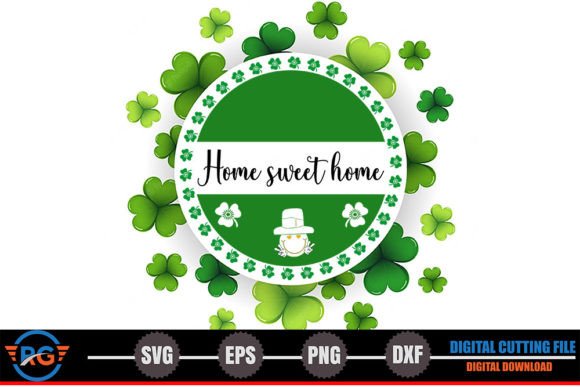
Home Sweet Home – SVG: A Designer's Real-World Review
When I first opened the Home Sweet Home – SVG file, my immediate thought wasn't about the technical specifications or the list of included formats. Instead, I was struck by the mood it set. As a designer who spends hours evaluating embroidery files for both personal projects and client work, I look for that specific spark—a design that feels ready to be stitched immediately. This particular piece carries a warm, inviting energy that screams "welcome." It isn't just a graphic; it is a statement piece designed to make any space feel lived-in and loved.
The product falls under the Crafts category with a focus on Graphics, but in the hands of an embroiderer, it transcends those labels. The layout suggests a classic round sign motif, which is incredibly versatile. Whether you are looking to create a festive St. Patrick's Day accent or a year-round welcome sign, the core design holds up well. It strikes a balance between decorative flair and legibility, a crucial factor when converting digital art into physical thread.
From Screen to Stitch: Real Project Scenarios
To truly understand the value of this design, I decided to put it through its paces in a real-world scenario. I envisioned a custom embroidered tote bag project for a local craft fair. The goal was to create a boutique-style accessory that felt handmade yet professional. I loaded the Home Sweet Home – SVG into my digitizing software to check how the vector paths would translate to machine stitches.
The design naturally lends itself to a sturdy canvas or denim tote bag. The round shape frames perfectly on the front panel, creating a focal point that draws the eye. For a holiday gift, I imagined swapping the standard green threads for a deep emerald and gold palette to honor the St. Patrick's Day theme mentioned in the description. However, the beauty of this embroidery file lies in its adaptability. If I were to stitch this onto a baby onesie, I might scale it down slightly and use soft pastels, turning it into a sweet nursery decoration. The versatility here is what makes it a strong asset for an Etsy seller looking to diversify their inventory without buying multiple new designs.
I also considered using this for a kitchen towel. The phrase "Home Sweet Home" is timeless, and placing it on a tea towel adds a touch of rustic charm to a modern kitchen. In this context, the design acts as a centerpiece, elevating a simple utility item into a thoughtful personalized gift. The visual weight of the round sign ensures it doesn't get lost against the texture of the fabric, provided the stitch density is managed correctly.
Performance on Various Fabrics and Surfaces
Not all fabrics play nice with every design, and knowing where to apply your skills is half the battle. When I tested the Home Sweet Home – SVG mentally against different materials, certain applications stood out as ideal. Heavy-weight cotton, linen, and felt provide excellent stability for the satin stitches required for the lettering and the border. These materials hold the thread tension well, ensuring the final product looks crisp and clean.
However, there are areas where caution is necessary. If you plan to use this design on a curved surface like a baseball cap or a beanie, you need to be mindful of the distortion that occurs during stitching. While the round shape of the design mimics the curvature of a hat, the text inside must remain legible. On thin or stretchy fabrics, such as lightweight jersey knits, this design could potentially pucker if not stabilized properly. In these cases, a cut-away stabilizer is non-negotiable to maintain the integrity of the embroidery project.
Dense stitch areas can sometimes cause issues on textured fabrics like bouclé or thick fleece. The needle penetration might struggle, leading to uneven coverage. For these materials, a lighter fill or running stitch variation might be more appropriate, though the original design likely relies on a mix of satin and fill stitches. If you are working with dark fabric, the thread color contrast becomes critical. You will want to ensure the chosen thread colors pop enough to be seen from a distance, especially for items like sweatshirts or hoodies where the design serves as a primary branding element.
Visual Appeal and Commercial Viability
For small business owners and creative entrepreneurs, the visual appeal of a finished product directly impacts customer trust and sales. A sloppy stitch job can ruin an otherwise great design, but a well-executed one builds brand consistency. The Home Sweet Home – SVG has a clean, professional aesthetic that translates well to high-end finished products. It avoids overly trendy elements that might date quickly, making it a safe bet for a shop that wants to offer evergreen items alongside seasonal specials.
When used for commercial embroidery, the design's clarity is key. Customers appreciate details that are sharp and well-defined. The round sign format offers a natural boundary that keeps the eye focused, preventing the design from feeling cluttered. This is particularly important for smaller items like embroidered patches or apron pockets, where space is limited. If the design includes intricate corners or tiny lettering, those are the areas that require close inspection before mass production. Ensuring that the stitch density is optimized prevents the fabric from becoming too stiff, which is a common complaint with low-quality embroidery.
The ability to change colors easily, as noted in the product features, is a massive advantage for digital product sellers. Being able to generate printable mockups in various colorways allows you to showcase the design's potential to clients without physically stitching every single variation. This flexibility enhances buyer engagement, as customers can visualize the design in their own color schemes before committing to a purchase.
Practical Notes for the Embroidery Designer
Before you start stitching, there are a few practical steps every experienced designer should take. First, always test the design on scrap fabric that matches the texture and weight of your final material. This helps you gauge the stitch density and identify any potential puckering issues early on. Check the thread color contrast against your fabric background; a design that looks good on a white screen might disappear on a navy blue shirt if the wrong thread is chosen.
Review the file structure carefully. The package includes SVG, EPS, DXF, and PNG formats, which gives you plenty of options for different software workflows. Confirm the hoop size requirements before setting up your machine. If the design is larger than your machine's hoop, you may need to split the file or reposition the stitching sequence. Inspect small details closely; sometimes, vectors that look fine on a computer screen can become muddy when converted to stitches.
It is also wise to test the design in black and white mockups to ensure the composition works regardless of color. Compare how it looks on light versus dark backgrounds to determine the best thread choices. Use proper stabilizer for your specific fabric type to prevent shifting and distortion. Finally, confirm the licensing terms before selling finished items or offering the digital product itself. Understanding whether you have commercial rights is essential for protecting your business and respecting the creator's intellectual property.
In conclusion, the Home Sweet Home – SVG is more than just a download; it is a tool for creating meaningful, high-quality handmade products. Its warm aesthetic and adaptable structure make it suitable for a wide range of applications, from holiday gifts to boutique merchandise. With careful attention to fabric selection, stabilization, and thread choice, this design can elevate your craft business and delight your customers with its timeless charm.