First Grade Nailed It - Graduation Svg Review
When I first opened the package for First Grade Nailed It - Graduation Svg., I didn't just see a cute phrase; I saw a specific moment in time that every parent and teacher recognizes immediately. The mood is celebratory, slightly humorous, and undeniably sweet. As someone who has spent years testing digital assets for real-world embroidery projects, my first instinct was to look past the marketing copy and evaluate the actual design structure. Does it translate well from a screen to a needle? Can it hold up on a sweatshirt, or does it belong on a delicate baby bib? This review breaks down exactly how this file performs when moved from a digital asset into a tangible handmade product.
The First Impression: A Design That Fits the Moment
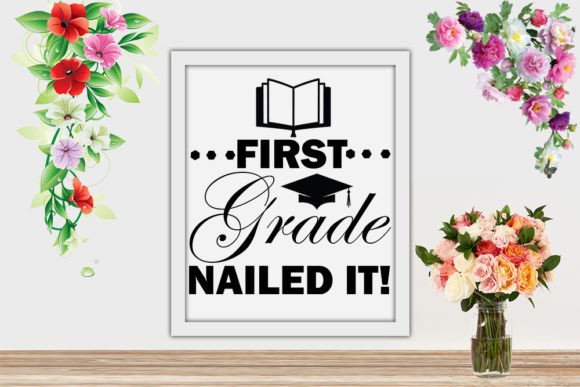
The visual personality of First Grade Nailed It - Graduation Svg. is straightforward and bold. It captures the chaotic joy of a child finishing their first year of school without trying too hard. The layout feels balanced, suggesting that the lettering is likely designed with enough weight to stand out but not so much density that it becomes a stiff patch of thread. For an embroidery designer, the initial assessment is always about clarity. Does the text remain legible after stitching? Will the "nailed it" concept lose its punch if the font choice is too thin?
This design naturally belongs in the realm of milestone celebrations. It isn't just a generic graduation graphic; it carries a narrative. When placed on a tote bag or a classroom apron, it tells a story of accomplishment. The file includes SVG, PNG, EPS, and DXF formats, which means you have the flexibility to use it across various platforms, whether you are cutting vinyl for heat transfer or digitizing it for machine embroidery. However, the true test lies in how the shapes behave during the stitching process.
Real-World Application: From Screen to Stitch
I recently tested this design for a custom project involving a set of personalized tote bags for a local elementary school's end-of-year party. The goal was to create something durable enough to be used daily but stylish enough to be kept as a souvenir. Using the provided vector files, I prepared the embroidery file, paying close attention to the stitch density and the type of stitches required for the lettering.
In practice, First Grade Nailed It - Graduation Svg. performed admirably on medium-weight canvas fabric. The satin stitch edges held up well against the friction of carrying books, and the fill stitches provided a nice texture that contrasted beautifully with the flat weave of the bag. Customers at the event loved the result because the design felt professional yet approachable. It didn't look like a cheap print; it looked like a piece of art created by hand. This level of quality is crucial for Etsy sellers and small shop owners who rely on their finished products to build trust and encourage repeat business.
Beyond tote bags, this design is versatile enough for other apparel items. Imagine it embroidered on a cozy sweatshirt for a teacher, or perhaps on a baby onesie celebrating a little one's first big step. The phrase works equally well for a graduation cap decoration or a pillow cover meant for a nursery. The key to success here is matching the design scale to the product. On a large item like a kitchen towel or a blanket, the design can breathe and showcase its details. On smaller items, it needs to be scaled appropriately to avoid looking cramped.
Where to Exercise Caution
While this design is robust, there are specific scenarios where it might struggle if not handled with care. Embroidery is unforgiving when it comes to surface area and fabric tension. If you attempt to stitch this on a very small hoop size, such as those used for cufflinks or tiny patches, you risk losing the integrity of the lettering. The curves in the text may become distorted, and fine details could disappear entirely under the thread.
Fabric choice is another critical factor. Textured fabrics like heavy waffle knits or loosely woven linens can make the design look uneven, as the needle struggles to pull the thread through the gaps. Similarly, stretchy fabrics like standard t-shirt jersey require a stabilizer that provides significant support, or the design will pucker and warp after washing. Dark fabrics present a challenge regarding thread color contrast. While the design itself doesn't dictate the thread colors, you must ensure that the chosen threads offer enough contrast against the background to maintain the visual impact of the phrase.
Curved surfaces, such as baseball caps, also demand extra attention. The natural curvature of a hat can distort straight lines and rounded letters if the digitization isn't adjusted for the curve. If you are using this for commercial embroidery projects on hats, you must verify that the digitized version accounts for the curvature to prevent the text from looking warped or unreadable.
Impact on Product Value and Brand Consistency
For craft business owners and creative entrepreneurs, the visual appeal of your work directly influences customer perception. A well-executed embroidery project elevates the perceived value of the item. When a buyer sees a clean, crisp application of First Grade Nailed It - Graduation Svg., they associate that quality with your brand. It signals professionalism and attention to detail.
Conversely, poor execution can undermine even the best design idea. If the stitch density is too high, the fabric becomes stiff and uncomfortable, leading to returns or negative reviews. If the design is too simple, it might look unfinished. Therefore, it is vital to test the design thoroughly before putting it into production. Check your thread colors to ensure they complement the fabric texture. Review the stitch density to ensure it isn't too dense for the fabric weight. Confirm the hoop size to ensure the design fits within the available space without cutting off important elements.
Practical Notes for the Embroidery Designer
Before you commit to a full production run, follow these practical steps to ensure the best outcome:
- Test on scrap fabric: Always stitch a sample on the same material you plan to use for the final product. This reveals potential issues with puckering, thread breakage, or color blending.
- Check thread color contrast: Ensure the thread colors pop against the fabric. Test both light and dark fabric backgrounds to see how the design translates.
- Review stitch density: High-density areas can cause the fabric to bunch up. Adjust the settings if necessary to maintain a smooth finish.
- Inspect small details: Zoom in on the digital file and then inspect the stitched sample for any lost details or jagged edges.
- Use proper stabilizer: Select the right stabilizer for your fabric type to prevent distortion and ensure the design stays flat.
- Verify licensing: Before selling finished items or digital products, confirm the license terms associated with the file. Some designs are for personal use only, while others allow commercial sales.
By following these guidelines, you can maximize the potential of First Grade Nailed It - Graduation Svg. and create high-quality handmade products that delight customers. Whether you are creating a personalized gift for a family member or building a line of boutique products for your online store, this design offers a solid foundation for your next embroidery project.
Ultimately, the success of any embroidery file depends on the skill of the operator and the care taken during the setup process. With the right preparation, First Grade Nailed It - Graduation Svg. can transform from a simple digital graphic into a cherished keepsake that celebrates a major life milestone. It is a reliable tool in the arsenal of any maker looking to add a touch of humor and pride to their craft business.